Designing for Florida Humidity: Materials That Last in Coastal Homes
South Florida humidity, salt air, and coastal exposure punish cabinetry that was specified for a dry climate. This is what we use, why we use it, and what fails when shops cut corners on the substrate, the joinery, the finish, and the hardware.
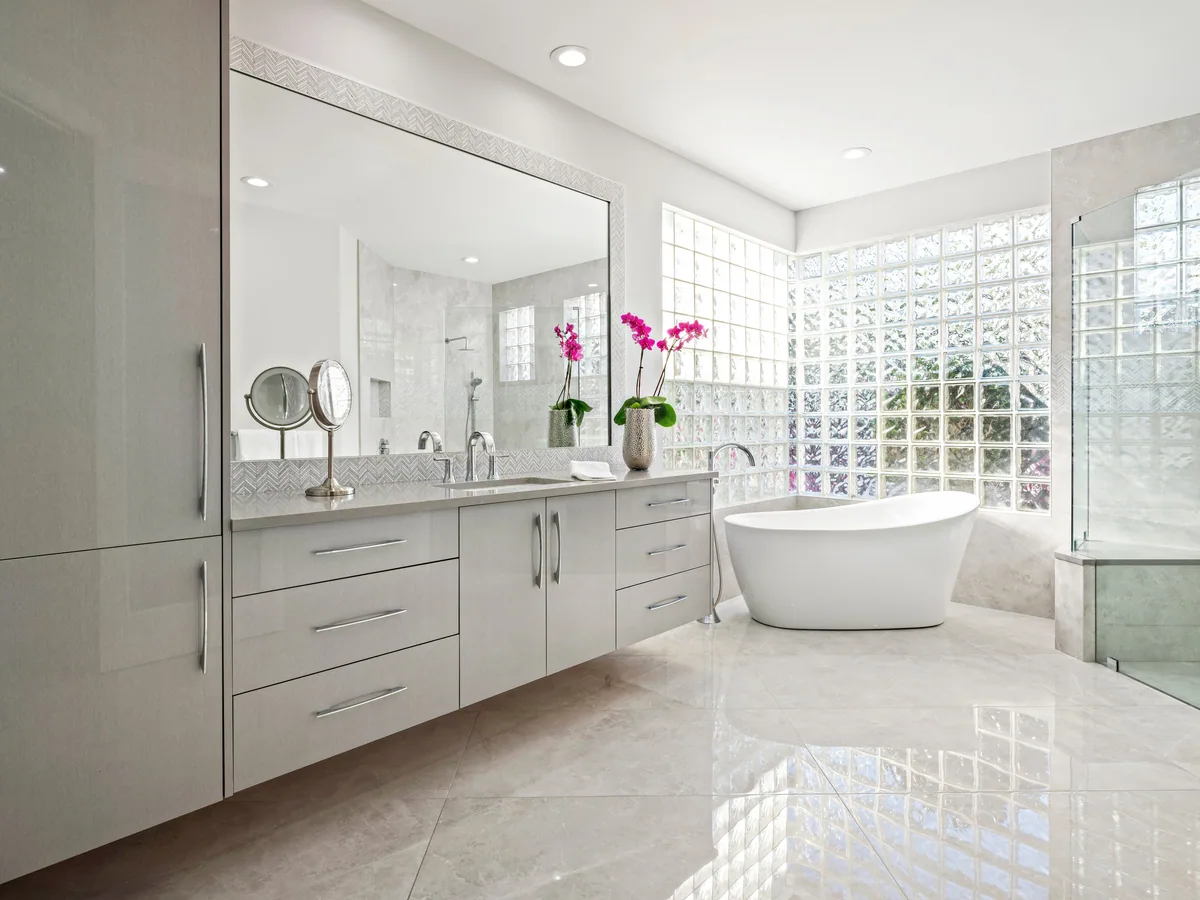
The South Florida climate is a finish-killer for cabinetry that was not specified for it. We see the failure pattern in every renovation we are called in to assess. Doors drop within five years because the joints failed. Edges swell because the particleboard substrate wicked moisture from the air-conditioned-to-humid swing of a bathroom. Finish coats craze and peel because they were catalyzed for dry climates and never sealed against humidity. Hardware corrodes because the salt air from the Atlantic is not theoretical. it is the air the kitchen breathes.
This piece walks through what we specify in our shop and why. It is technical. The reason it is technical is that the difference between cabinetry that lasts twenty-five years in South Florida and cabinetry that fails at five years comes down to specific material decisions made early in the project.
Substrate
The substrate is the material the cabinet box itself is made from. It is invisible in a finished kitchen. you see the doors, the drawer fronts, the panels, the trim. and so it is the easiest place for a shop to economize. It is also the place where the climate does the most damage if the wrong material is specified.
What we use:
- Cabinet-grade hardwood plywood (typically 3/4-inch baltic birch or domestic hardwood ply) for cabinet boxes in standard residential applications.
- Marine-grade plywood for cabinetry in primary baths, outdoor kitchens, pool houses, wet bars, and any application with sustained humidity exposure.
- Solid hardwood for face frames, door frames, and any structural element of the cabinet.
What we do not use:
- Particleboard, regardless of laminate or melamine facing. Particleboard wicks moisture from the air. In a South Florida bathroom it swells at the edges within five years.
- MDF in wet applications. MDF can hold paint beautifully and is appropriate for some interior architectural millwork, but it cannot tolerate sustained humidity exposure. We use it sparingly.
The cost difference between a cabinet box built in marine-grade ply and one built in melamine particleboard is real but not dramatic. perhaps 15% to 25% on the materials line. The lifespan difference is dramatic. A particleboard box in a South Florida bath is a five-to-eight-year cabinet. A marine-grade ply box in the same bath is a twenty-five-year cabinet, often longer.
Joinery
Wood moves with humidity. Properly joined cabinetry is engineered to accommodate the movement. Improperly joined cabinetry develops failures wherever the engineering did not account for the movement.
What we use:
- Mortise and tenon for door frames and face frames. Pinned mortise-and-tenon for furniture-grade work.
- Dovetail joinery in drawer boxes, with solid hardwood box construction.
- Floating panels in stile-and-rail door construction. The panel sits in a groove and is allowed to expand and contract without stressing the frame or the finish.
- Dado-and-dowel for box assembly with biscuit reinforcement at structural points.
What we do not use:
- Pocket-screwed face frames. Pocket screws are appropriate for some joinery but not for face frames in cabinetry that needs to last.
- Stapled drawer boxes. The fasteners loosen with the wood movement, and the drawer racks within a few years.
- Glued-and-stapled construction without mechanical joinery. The glue holds initially but the seasonal movement breaks the bond.
The point of proper joinery in a humid climate is not aesthetic. It is structural. A drawer box that is dovetailed and glued will hold together for decades through the seasonal swings of South Florida humidity. A drawer box that is stapled and glued will start to rack within five years.
Finish
The finish is the cabinetry’s seal against humidity. A good finish system seals every face of every panel. including the back, the inside, the endgrain, and any surface the homeowner will never see. with multiple coats built up over several days, sanded between coats, and rated for high-humidity environments.
What we use:
- Conversion-varnish finish systems for daily-use surfaces (kitchens, baths, dressing rooms). Conversion varnish is a two-component finish that catalyzes into a tough, humidity-resistant film. We build it up in five to seven coats with hand-sanding between coats.
- Catalyzed lacquer for furniture-grade pieces where the finish needs to read as part of the wood rather than as a film. Built up over four to six coats with hand-rubbing on the final coat.
- Hand-rubbed oil finishes for select furniture pieces where the wood character needs to read more than the finish does. These are built up over many days and require more maintenance than catalyzed finishes, but they age into a patina that catalyzed finishes cannot match.
What we do not use:
- Single-pass spray finishes that were not catalyzed. They look fine on day one and start crazing within three years in coastal Florida homes.
- Water-based finishes alone for high-humidity applications. Water-based topcoats have improved enormously in the last decade but they still do not handle sustained humidity as well as a catalyzed conversion varnish.
- Any finish system that does not seal the back side of doors and panels. An unsealed back face wicks moisture differently from the sealed face, and the panel cups and warps over a few years.
Hardware
The Atlantic is close. Salt air carries inland for miles. Hardware that does not handle salt corrodes within five years in even an inland Palm Beach County home. Coastal homes (Jupiter Island, Seminole Landing) need salt-rated hardware everywhere.
What we use:
- Solid brass for visible hardware in coastal applications. Brass develops a patina but does not corrode structurally.
- Stainless steel (316-grade marine stainless for direct coastal exposure) for structural fasteners and concealed hardware in coastal homes.
- Top-tier soft-close hinges and slides. Blum, Salice, Hettich. The mechanisms in these hardware lines are sealed and engineered for high-humidity environments.
What we do not use:
- Plated zinc hardware in any visible location. Plating fails within a few years in coastal Florida.
- Carbon-steel fasteners in wet or coastal applications. Stainless or bronze only.
Putting it together
A cabinetry package built for South Florida humidity is a sequence of small material decisions made consistently across the substrate, the joinery, the finish, and the hardware. None of the decisions individually is dramatic. The cumulative effect is the difference between a kitchen that needs to be replaced in eight years and one that lasts twenty-five.
If a cabinetmaker cannot speak fluently about substrate selection for humidity, finish system catalysts, and hardware corrosion ratings, they have not been building for this climate. There are good shops in Palm Beach County that have. The shops that have not are easy to identify because the failures show up in their five-year-old work.
If you would like to talk through a project, particularly a primary bath, an outdoor kitchen, or any application with sustained humidity exposure, contact us. Consultations are by appointment, with the team that builds the work.
Related: Bathrooms and Vanities · Custom Kitchens · Bars and Wine Rooms